
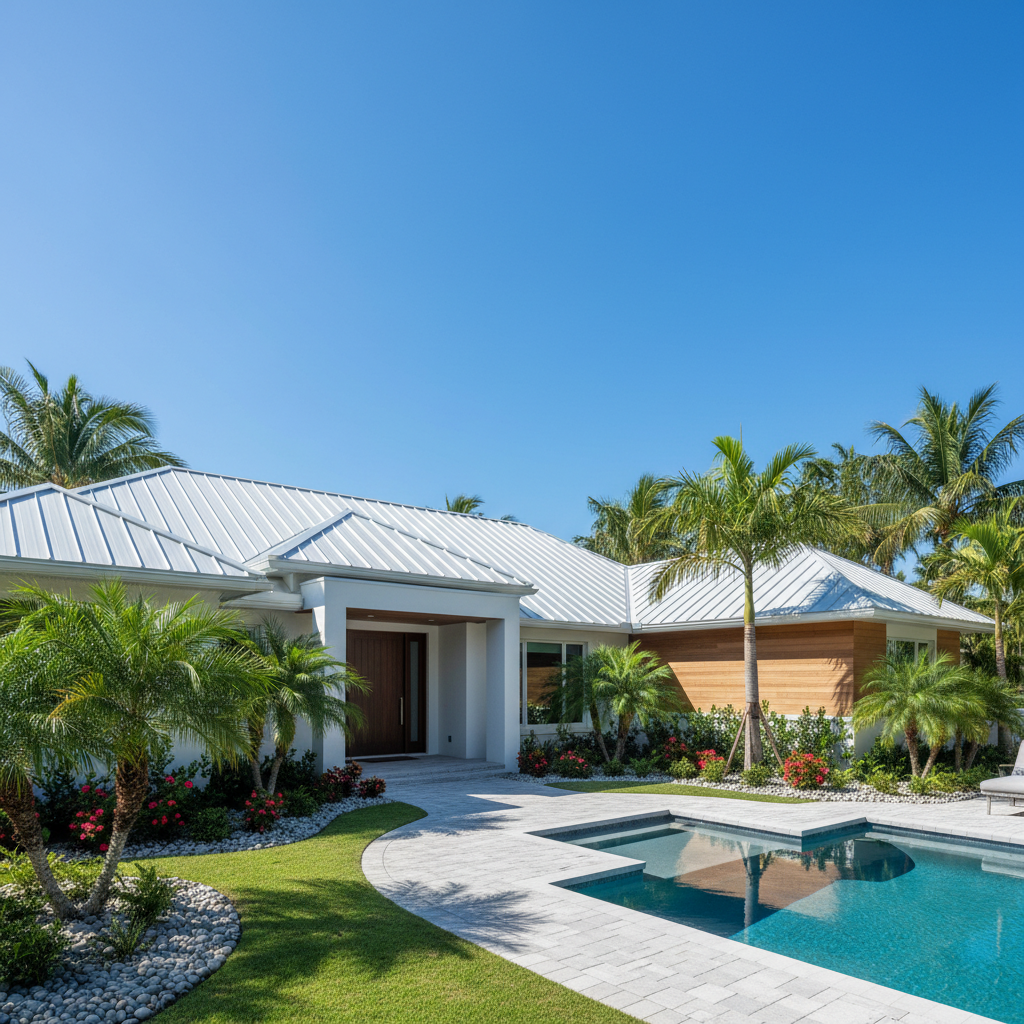
A cool roof is designed to reflect more sunlight and absorb less heat than a standard dark roof surface. In a state like Florida, that idea deserves real attention because the roof is exposed to intense sun for long stretches of the year.
The Department of Energy explains that cooler roofing surfaces can stay significantly lower in temperature than conventional roofs. That does not automatically make every roof replacement a cool-roof project, but it does make cool-roof options worth discussing whenever a Florida home is due for major roofing work.
What a cool roof changes
The main difference is solar reflectance and thermal emittance. In plain language, a cool roof reflects more sun and releases absorbed heat more effectively. That can reduce roof surface temperature and lower the heat load moving into the home.
Why Florida homeowners ask about it
- Long hot seasons increase attic and ceiling heat buildup
- Air-conditioning demand is already high for much of the year
- Roof replacements are expensive enough that homeowners want performance improvements built into the project
Where cool-roof thinking actually helps
Cool-roof performance tends to matter most when the home has high sun exposure, attic heat problems, older ventilation details, or a replacement project already on the calendar. It is strongest as part of a full roofing conversation, not as a magic standalone fix.
What a cool roof does not replace
Cool-roof materials do not remove the need for proper ventilation, flashing, drainage, fastening, or routine maintenance. If the roof system is weak in those areas, the home can still leak or age poorly even if the surface is more reflective.
When to ask your roofer about it
The best time to evaluate cool-roof options is during a roof replacement or new installation, when material choice and system design are already part of the project. That is when a Florida homeowner can compare appearance, budget, performance, and long-term maintenance in one conversation.
KEY TAKEAWAYS
- Cool roofs can help in hot climates, especially when the roof gets strong direct sun.
- They work best as part of a full replacement or new installation decision, not as a shortcut around other roofing problems.
- Ventilation, flashing, drainage, and workmanship still matter just as much as the roof color or coating.