
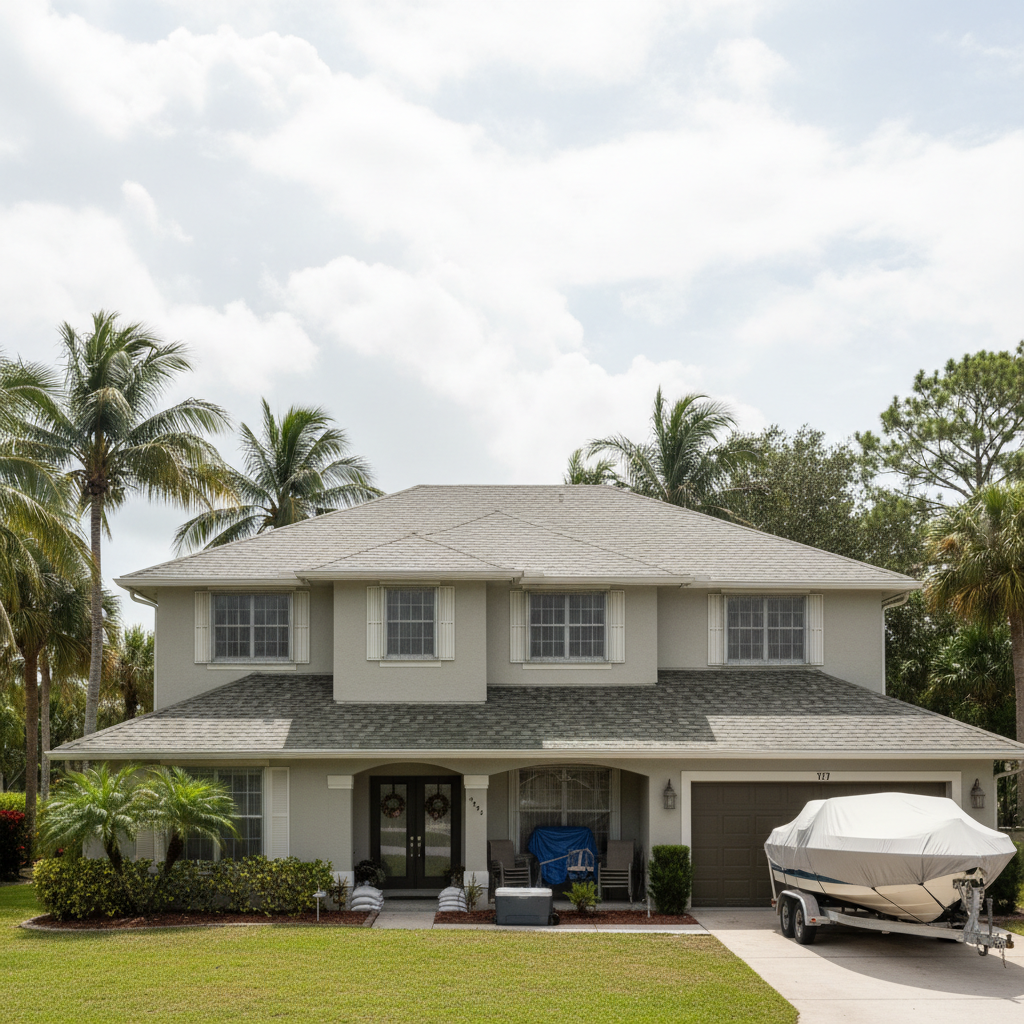
Florida homeowners usually think about water, shutters, and supplies first, but your roof is the part of the house that takes the hit before anything else. Waiting until a tropical storm is already in the forecast is usually too late for a meaningful repair or upgrade.
The Florida Division of Emergency Management keeps urging residents to prepare early, and FEMA continues to emphasize strengthening the parts of the home most exposed to wind and water. For roofing, that means checking the roof now, documenting the current condition, and fixing small weaknesses before storm season starts.
1. Start with a visual check from the ground
Walk the property and look for missing shingles, lifted edges, sagging areas, flashing damage, or obvious debris impact. You are not trying to diagnose everything yourself. You are just looking for the signs that the roof should be professionally inspected before the next major storm cycle.
2. Clear gutters and downspouts before heavy rain arrives
Overflowing gutters can send water back toward the roof edge, fascia, and soffit when Florida rain bands stall over the house. Cleaning drainage paths now gives the roofline one less way to fail under pressure.
3. Trim limbs that can scrape or fall onto the roof
Tree limbs are one of the fastest ways a manageable storm turns into a roof emergency. Branches can puncture shingles, damage flashing, and dump debris into valleys and gutters right when you need fast drainage the most.
4. Check the attic for warning signs
- Water stains on decking or insulation
- Daylight coming through boards or penetrations
- Musty odors that point to long-term moisture
- Hot, stagnant air that suggests ventilation issues
5. Photograph the roof before storm season
Current photos matter. If storm damage happens later, it helps to have pre-storm images showing the condition of the roof, gutters, and nearby trees. Those photos can make inspection and claim conversations much easier.
6. Ask whether your next replacement should include stronger wind upgrades
If the roof is already aging or has repeated repair history, hurricane-season prep may be the point where it makes more sense to talk about a stronger replacement system. This is where details like sealed roof decks, better edge protection, and stronger fastening patterns start to matter.
7. Do not wait for the first storm watch
Once major weather is on the radar, contractor schedules tighten, supply chains slow down, and small roof problems become urgent. The strongest storm-season move is to inspect and act before everyone else is trying to do the same thing.
KEY TAKEAWAYS
- Do the visual and drainage checks early, not when a storm is already approaching.
- Document the roof condition before storm season for easier inspection and claim conversations.
- If the roof is already near the end of its life, use prep season to talk about stronger replacement options.